🐾Pawbiotics

Dogs

Why Do Dogs Lick Their Paws? Causes and Treatments

Published 2026-05-0110 min read

Occasional paw licking is normal. Dogs clean themselves. A quick lick here and there means nothing. But constant, obsessive licking? That's your dog telling you something is wrong. Here's how to figure out what — and fix it.

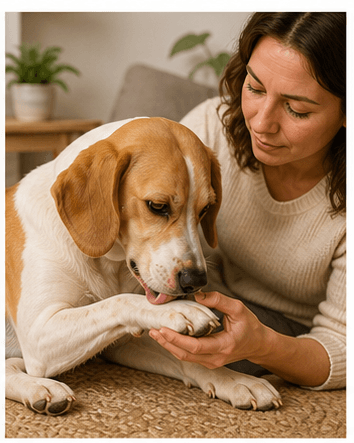
Dog licking a paw while an owner gently checks for irritation
Repeated paw licking can point to itch, pain, infection, allergies, or stress.
Educational guide only. This article does not replace a veterinary exam, diagnosis, or emergency care.

Normal vs. Concerning Licking

Normal: brief grooming after a walk, after eating, occasionally before sleep.

Concerning: licking that goes on for minutes, returns frequently throughout the day, causes red or raw skin, or creates brown staining on the fur (saliva stains).

Brown staining between the toes is often the first visible sign of chronic paw licking.

Causes — Every Possibility

1. Environmental Allergies

The most common cause. Also called atopic dermatitis.

Dogs react to grass, pollen, mold, dust mites, and other airborne allergens. Unlike humans who sneeze, dogs with allergies itch. Their paws — which contact the ground constantly — are a primary target.

Signs: licking is seasonal (spring/fall pollen peaks), affects all four paws, often accompanied by itchy ears, belly, and armpits.

2. Food Allergies

Food allergies cause year-round itching that doesn't respond to seasonal treatments.

Common culprits: beef, chicken, dairy, wheat, corn. A protein your dog has been eating for years can suddenly trigger an immune response.

The only reliable way to diagnose a food allergy is an elimination diet — a strict 8–12 week trial with a novel protein source or hydrolyzed protein diet.

3. Contact Dermatitis

Direct skin irritation from something the paws touch.

Common triggers: lawn chemicals and fertilizers, road salt in winter, cleaning products on floors, new flooring materials.

Signs: licking starts suddenly after a walk or floor cleaning, affects only the feet (not other body parts), improves when the irritant is removed.

4. Yeast Infection

Yeast (Malassezia) thrives in warm, moist environments — like the skin between dog toes.

Symptoms: musty or corn-chip-like odor from the paws, reddish-brown discoloration of fur between toes, itching and swelling.

Yeast infections are often secondary to allergies. The allergy disrupts the skin barrier, yeast moves in.

5. Bacterial Infection

Broken skin from chronic licking allows bacteria to enter. The resulting infection causes more itching, which causes more licking.

Signs: visible sores, crusting, discharge, swelling, foul smell.

Requires antibiotics — topical or systemic depending on severity.

6. Injury or Pain

A thorn, splinter, small cut, cracked pad, or broken nail.

Check the affected paw closely. Part the fur between toes. Examine the pads for cuts or cracking.

Signs: licking is localized to one paw only, dog may limp.

7. Dry or Cracked Paw Pads

Hot pavement in summer, cold concrete in winter, and rough terrain all crack paw pads.

Dry, cracked pads itch and irritate. Licking follows.

Treat with a veterinary paw balm or coconut oil. Avoid human lotions — some ingredients are harmful.

8. Parasites

Fleas, mites (mange), and ticks can all drive paw licking. Even a flea allergy reaction — triggered by a single flea bite — can cause intense, generalized itching that focuses on the paws.

Demodicosis (demodex mites) causes hair loss and crusty skin between the toes.

9. Anxiety and Boredom

Dogs lick to self-soothe. It's repetitive. Calming. Similar to humans biting nails.

Signs: licking happens primarily when the dog is alone, unstimulated, or during stressful events. No visible skin problems initially — but chronic anxious licking causes real skin damage over time.

How to Diagnose the Root Cause

Ask yourself:

Your vet will examine the skin, potentially run skin scrapes, cultures, or allergy tests to confirm.

Checklist

  • Is it one paw or all paws? One paw suggests injury or local irritant. All paws suggest systemic issue.
  • Is it seasonal? Points to environmental allergy.
  • Did it start after a dietary change? Food allergy.
  • After a specific product use? Contact dermatitis.
  • Is there odor between the toes? Yeast infection.

Treatments

For Allergies

Checklist

  • Antihistamines — first line for mild cases
  • Apoquel or Cytopoint — prescription medications that specifically target itch signals. Highly effective.
  • Allergy immunotherapy — the only long-term solution for environmental allergies
  • Elimination diet trial — for food allergy identification

For Infections

Checklist

  • Antibiotics (bacterial) — topical or oral depending on depth
  • Antifungals (yeast) — medicated shampoos, wipes, or oral medication

For Contact Irritation

Checklist

  • Wipe paws after every walk with a damp cloth or pet-safe wipes
  • Use dog booties during winter or on treated surfaces
  • Switch to pet-safe floor cleaners

For Anxiety

❓ Frequently Asked Questions

Checklist

  • Increase daily exercise and mental stimulation
  • Puzzle feeders and enrichment toys
  • Calming supplements — L-theanine, melatonin
  • Behavioral consultation or veterinary prescription anti-anxiety medication for severe cases

Frequently Asked Questions

Night licking often points to allergies (itching intensifies when activity stops) or anxiety (quiet environment amplifies restlessness). If it's happening daily, have your vet evaluate for underlying allergy or behavioral cause.

Treat the root cause. No deterrent spray stops a dog that's in genuine discomfort. Identify whether it's allergies, infection, injury, or anxiety — then treat that specifically.

Red, irritated skin between the toes, reddish-brown staining of fur, a distinct musty or corn-chip odor, and swelling. Often accompanied by ear yeast infections.

Apple cider vinegar or bitter apple spray may deter licking temporarily. But these don't treat the cause. A paw balm can help dry, cracked pads. For infections or allergies, veterinary treatment is needed.

Yes — it can be. Localized licking of one paw often means injury, splinter, broken nail, or a sting. Check the paw carefully and see a vet if you can't identify or remove the cause.