🐾Pawbiotics

Dogs

Hot Spot on Dog: Causes, Treatment, and Prevention

Published 2026-05-0110 min read

Your dog won't stop licking one spot. The fur is matted. The skin underneath is red, wet, and raw. That's a hot spot. And it needs attention fast. Hot spots can double in size within hours. Early treatment is the difference between a minor irritation and a deep skin infection.

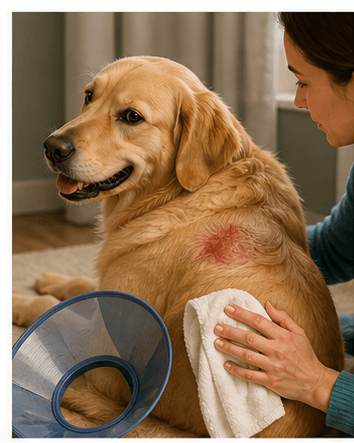
Dog with a mild non-graphic skin hot spot being cared for by an owner
Hot spots can worsen quickly when dogs keep licking or chewing the irritated skin.
Educational guide only. This article does not replace a veterinary exam, diagnosis, or emergency care.

What Is a Hot Spot on a Dog?

A hot spot — also called acute moist dermatitis — is a localized area of inflamed, infected skin.

It develops when a dog scratches, licks, or chews one spot repeatedly. The constant moisture and trauma break down the skin barrier. Bacteria colonize the damaged tissue. The infection spreads.

Hot spots are painful. They itch intensely. And the more the dog licks, the worse it gets.

Common Causes

Anything that triggers itching can start a hot spot. The most frequent causes:

Golden Retrievers, Labrador Retrievers, German Shepherds, and Rottweilers are among the most commonly affected breeds.

Checklist

  • Flea bites — especially in flea-allergic dogs, a single bite can trigger an intense itch response
  • Environmental allergies — grass, pollen, mold
  • Food allergies — proteins like chicken or beef are common culprits
  • Ear infections — dogs scratch near the ear and jaw, creating a prime hot spot zone
  • Matted fur — traps heat and moisture against the skin
  • Poor grooming — especially in thick double-coated breeds
  • Boredom or anxiety — stress licking
  • Contact irritants — wet fur from swimming or bathing that doesn't dry fully

What Does a Hot Spot Look Like?

Hot spots appear suddenly. In one day, a small red patch can become a large, weeping sore.

Signs to look for:

Hot spots most commonly appear on the head (near ears), hip area, and sides of the chest.

Checklist

  • Red, moist, raw-looking skin
  • Defined edges — often circular
  • Matted or missing fur over the lesion
  • Sticky, yellowish discharge or crust
  • Dog constantly licking, chewing, or scratching the area
  • Foul odor from the skin

How to Treat a Hot Spot on a Dog

Start treatment the moment you notice it. Speed matters.

Step 1 — Clip the Area

Carefully clip the fur around and over the hot spot. Use blunt-nosed scissors or electric clippers.

You need to expose the skin to air. Fur traps moisture and feeds the infection.

Clip at least an inch beyond the visible edge of the sore.

Step 2 — Clean the Skin

Gently clean the area with a mild antiseptic solution — chlorhexidine 2% is ideal. Avoid alcohol or hydrogen peroxide. Both damage healing tissue.

Pat dry. Do not scrub.

Step 3 — Apply Topical Treatment

Over-the-counter options that help:

Apply 2–3 times per day. Keep the area dry between applications.

Checklist

  • Hydrocortisone spray (0.5–1%) — reduces inflammation and itching
  • Chlorhexidine spray — antibacterial, prevents infection spread
  • Colloidal oatmeal spray — soothes irritated skin

Step 4 — Stop the Licking

An e-collar (cone) is not optional. Without it, the dog will undo every treatment the moment you turn away.

Soft collars and inflatable alternatives work too — the key is preventing access to the site.

Step 5 — Monitor Daily

A properly treated hot spot should begin to look better within 3–5 days. The discharge stops. The redness fades. New skin forms at the edges.

If it's getting larger or the dog is in significant pain — see a vet.

When to See a Vet

Some hot spots need prescription treatment. Go to a vet if:

Vets typically prescribe oral antibiotics, short-term corticosteroids to stop itching, and medicated shampoos or sprays.

Checklist

  • The sore is larger than a golf ball
  • It's spreading rapidly — growing within hours
  • The dog is in visible pain
  • Thick yellow or green pus is present
  • The skin is breaking down or appears deeply infected
  • Home treatment hasn't improved it in 3–4 days

How to Prevent Hot Spots

Prevention focuses on eliminating the root cause.

Dogs that get recurring hot spots often have an underlying allergy driving them. Treating the allergy stops the cycle.

❓ Frequently Asked Questions

Checklist

  • Year-round flea prevention — the most impactful single step
  • Regular grooming — brush weekly, clip thick coats in summer
  • Dry your dog fully after swimming or bathing
  • Address allergies — work with your vet on a management plan
  • Keep ears clean and dry
  • Increase exercise for anxious or bored dogs

Frequently Asked Questions

Very fast. A hot spot can grow from a small red patch to a large infected sore within 24 hours. The sooner you treat it, the smaller and more manageable it stays.

Yes — mild cases respond well to home treatment. Clip the area, clean it with chlorhexidine, apply a topical antiseptic or hydrocortisone spray, and use an e-collar. If it's not improving in 3–4 days, see a vet.

No. Hot spots are not contagious. They're caused by the dog's own licking and scratching response, not an infectious agent that spreads between individuals.

Golden Retrievers, Labrador Retrievers, German Shepherds, Saint Bernards, and Rottweilers are most commonly affected. Thick coats and skin folds create a warm, moist environment where hot spots thrive.

Yes. Hot spots are painful and intensely itchy. Dogs often cry or flinch when the area is touched. Pain management is part of vet treatment for severe cases.

Rarely. Without treatment, hot spots typically worsen because the dog keeps licking. The infection deepens. Left alone, a surface hot spot can become a deep pyoderma requiring weeks of antibiotics.