🐾Pawbiotics

Cats

Can Cats Have Peanut Butter? What Every Cat Owner Should Know

Published 2026-05-039 min read

Peanut butter is a beloved treat for dogs — but what about cats? If your feline has shown interest in a spoonful, you've probably wondered whether it's safe to share. The short answer: peanut butter is not toxic to cats, but it's not a good idea either. Here's why — and what to watch for.

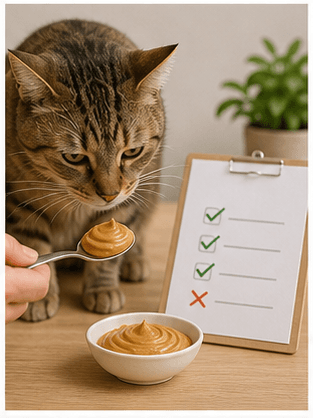
Cat sniffing a tiny spoon of peanut butter beside a caution checklist
Peanut butter is not toxic in tiny plain amounts for many cats, but it is not a good routine treat.
Educational guide only. This article does not replace a veterinary exam, diagnosis, or emergency care.

Is Peanut Butter Safe for Cats?

Peanut butter is not considered toxic to cats, but that doesn't make it a safe or appropriate food. Cats are obligate carnivores — their digestive systems are designed to process animal protein, not plant-based fats and sugars.

The ASPCA does not list peanut butter as toxic to cats, but several characteristics make it problematic:

Checklist

  • High fat content — can cause digestive upset and contribute to obesity
  • High caloric density — even a small amount is a significant calorie load for a cat
  • Added sugar and salt — many commercial varieties contain both
  • Xylitol risk — some brands contain this artificial sweetener, which is highly toxic to pets
  • Texture hazard — thick, sticky consistency can be a choking risk

The Xylitol Danger

This is the most critical safety concern. Xylitol is an artificial sweetener found in some "natural" or "reduced sugar" peanut butter brands. It is extremely toxic to animals — even small amounts can cause severe hypoglycemia (low blood sugar), seizures, liver failure, and death.

Always check the ingredient label before giving any peanut butter product to a cat or dog. Brands that have used xylitol include some "no-sugar-added" varieties. If xylitol is listed, keep the product away from all pets.

Why Cats Don't Really Like Peanut Butter

Cats lack the taste receptor for sweetness — a biological fact confirmed by genetics research. They are one of the few mammals that cannot taste sweet flavors at all. So while a curious cat might investigate peanut butter, it's unlikely to be genuinely appealing to them the way it is to dogs.

Any interest is usually driven by the fat smell and novelty rather than flavor enjoyment.

What Happens If a Cat Eats Peanut Butter?

A small lick of plain, xylitol-free peanut butter is unlikely to cause harm in a healthy adult cat. However, larger amounts can lead to:

If the peanut butter contained xylitol and your cat consumed any, contact your veterinarian or the ASPCA Animal Poison Control Center immediately.

Checklist

  • Vomiting and diarrhea from fat overload
  • Stomach upset or gas
  • Choking from the sticky texture
  • Weight gain with repeated feeding

Better Treat Alternatives for Cats

Cats derive no meaningful nutritional benefit from peanut butter. If you're looking for healthy treat options:

Any treat should make up no more than 10% of your cat's daily caloric intake.

Checklist

  • Cooked, plain chicken or turkey — high protein, no additives
  • Cooked salmon or tuna — occasional treat, high in omega-3s
  • Commercial cat treats designed for feline nutrition
  • Plain cooked eggs — a good protein source
  • Small pieces of cooked liver — nutrient-dense but give sparingly

Can Kittens Have Peanut Butter?

Kittens have more sensitive digestive systems than adult cats. You should not give peanut butter to kittens. Their nutritional needs during development are precise, and introducing high-fat, nutrient-poor foods is particularly risky.

Frequently Asked Questions

Occasionally and in tiny amounts (less than half a teaspoon), plain xylitol-free peanut butter is unlikely to harm a healthy adult cat. But it offers no nutritional value and better cat-appropriate treats exist.

Only plain peanut butter with no xylitol, no added sugar, and no artificial sweeteners. Always read the label. When in doubt, skip it.

Plain peanut butter is not toxic. However, peanut butter containing xylitol is extremely toxic. The texture also poses a choking risk.

If it was xylitol-free and only a small amount, monitor for digestive upset. If you're unsure whether it contained xylitol, or if your cat ate a large amount, call your vet immediately.

Yes, cats can have food allergies, including to peanuts. Signs include vomiting, diarrhea, skin itching, and hair loss. If you suspect an allergy, discontinue the food and consult a vet.