🐾Pawbiotics

Health Conditions

What Do Turtles Eat? A Complete Diet Guide by Species

Published 2026-05-0310 min read

Turtles have been on Earth for over 200 million years — and their diets are just as diverse as their habitats. Whether you own a pet turtle or are simply curious, understanding what turtles eat is essential for their health and longevity. This guide covers the diet of aquatic turtles, land turtles, and box turtles, along with foods to avoid and feeding tips backed by veterinary guidance.

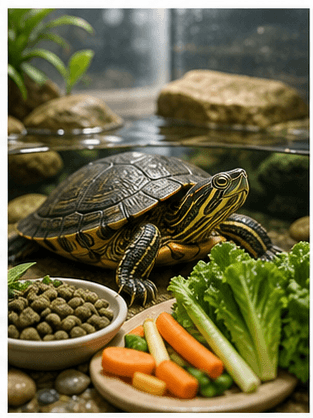
Aquatic turtle near leafy greens, pellets, and safe vegetables for a turtle feeding guide
Turtles need species-appropriate variety, clean water, and careful portion control.
Educational guide only. This article does not replace a veterinary exam, diagnosis, or emergency care.

What Do Turtles Eat in the Wild?

Wild turtles are opportunistic feeders. Their diet depends heavily on species, habitat, and age. Most turtles fall into one of three dietary categories:

Younger turtles tend to lean more carnivorous for protein to support growth, while adults of many species shift toward plant-based diets.

Checklist

  • Herbivores – primarily eat plants, grasses, and vegetables
  • Carnivores – eat insects, fish, worms, and small animals
  • Omnivores – eat both plant and animal matter

What Do Aquatic Turtles Eat?

Aquatic turtles like red-eared sliders, painted turtles, and map turtles are primarily omnivores. In the wild, they consume:

In captivity, a balanced diet for aquatic turtles includes commercial turtle pellets (40–50%), leafy greens like kale and romaine, and occasional protein sources like cooked chicken, feeder fish, or bloodworms.

Checklist

  • Small fish, tadpoles, and frogs
  • Aquatic insects and larvae
  • Worms and snails
  • Water plants and aquatic vegetation

What Do Box Turtles Eat?

Box turtles are true omnivores and one of the most varied eaters in the turtle world. Their diet includes:

In captivity, aim for a 50/50 split between protein and plant matter. Variety is key — rotating foods prevents nutritional deficiencies.

Checklist

  • Earthworms, beetles, and caterpillars
  • Strawberries, blueberries, and melons
  • Leafy greens and mushrooms
  • Carrion (occasionally in the wild)

What Do Land Turtles (Tortoises) Eat?

Land turtles, commonly called tortoises, are largely herbivores. Species like the sulcata tortoise, Russian tortoise, and Hermann's tortoise thrive on:

Tortoises should rarely eat fruit due to its high sugar content. Protein from animal sources is generally not recommended for most tortoise species.

Checklist

  • Timothy hay and grasses
  • Dandelion greens, plantain leaves, and clover
  • Cactus pads (for desert species)
  • Occasional vegetables like squash and bell peppers

Foods Turtles Should Never Eat

Not all foods are safe for turtles. Avoid the following regardless of species:

Checklist

  • Dairy products — turtles are lactose intolerant
  • Onions, garlic, and chives — toxic to reptiles
  • Rhubarb and avocado — toxic
  • Processed or salty foods
  • Iceberg lettuce — low in nutrients

How Often Should You Feed a Turtle?

Feeding frequency varies by age and species. As a general guideline:

Always remove uneaten food from the tank within 30 minutes to prevent water contamination and bacterial growth.

Checklist

  • Hatchlings and juveniles: feed daily
  • Adult aquatic turtles: feed every other day
  • Adult tortoises: feed daily, with hay available at all times

Do Turtles Need Supplements?

Yes. Captive turtles often lack calcium and vitamin D3 — both critical for shell and bone health. Dust food with calcium powder 2–3 times per week. UVB lighting is also essential for vitamin D3 synthesis in turtles that cannot get natural sunlight.

Frequently Asked Questions

Yes, but avoid iceberg lettuce. Opt for nutrient-dense options like romaine, red leaf lettuce, endive, or dandelion greens.

Aquatic turtles and box turtles can eat fruit in moderation — berries, melons, and mangoes are good options. Tortoises should rarely eat fruit due to sugar content.

Baby turtles need more protein than adults. Feed hatchlings small insects, worms, and protein-rich pellets daily. Add finely chopped greens as they grow.

Omnivorous and carnivorous turtles can eat cooked, unseasoned meat, feeder fish, or insects. Avoid processed meats with salt or additives.

Healthy adult turtles can survive several weeks without food, especially during brumation (winter dormancy). However, regular feeding is necessary for captive turtles' long-term health.