Dogs
How Many Teeth Does a Dog Have?
Published 2026-04-29 • 9 min read
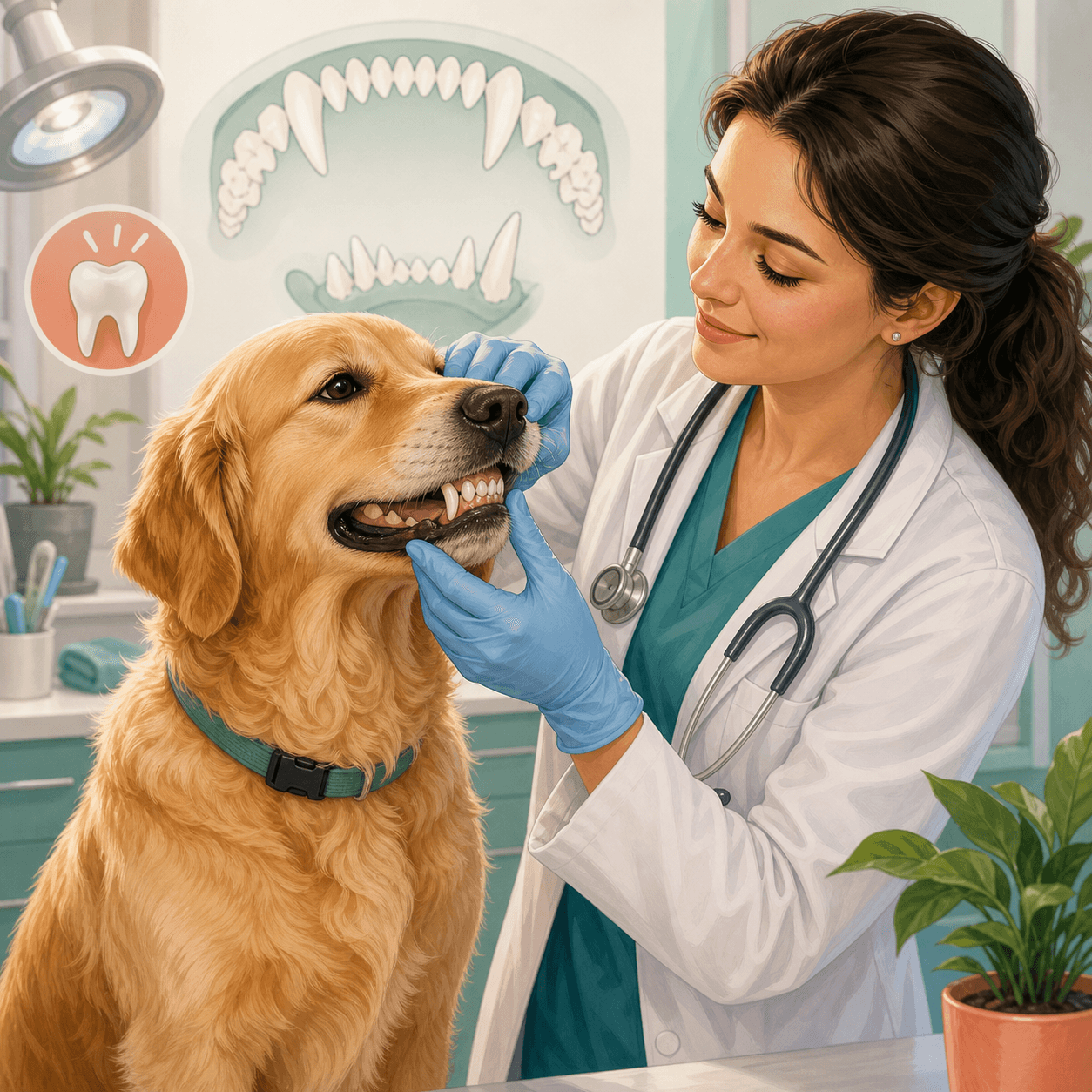
Adult dogs have 42 teeth. Puppies have 28 baby teeth. That's the quick answer — but there's a lot more to know if you want your dog's mouth to stay healthy. Dental disease is the most common health condition in dogs. By age 3, most dogs show some signs of it. Understanding your dog's teeth is the first step to preventing it.
Educational guide only. This article does not replace a veterinary exam, diagnosis, or emergency care.
Adult Dogs: 42 Teeth
The 42 permanent teeth break down into four types:
Checklist
- Incisors — 12 total (6 upper, 6 lower). Small front teeth used for nibbling and grooming.
- Canines — 4 total (2 upper, 2 lower). The long, pointed fang-like teeth. Used for gripping and tearing.
- Premolars — 16 total (8 upper, 8 lower). Located behind the canines. Used for shearing and chewing.
- Molars — 10 total (4 upper, 6 lower). Flat teeth at the back. Used for grinding.
Puppies: 28 Baby Teeth
Puppies are born without teeth. The deciduous (baby) teeth start coming in around 3–4 weeks of age.
Puppies have no molars. Those only come in with the permanent teeth.
Checklist
- Incisors — 12
- Canines — 4
- Premolars — 12
When Do Dogs Lose Their Baby Teeth?
The transition from 28 puppy teeth to 42 adult teeth happens between 3 and 7 months of age.
Eruption timeline:
By 7 months, most dogs have their full set of 42 permanent teeth.
Checklist
- 3–5 weeks: deciduous incisors erupt
- 5–6 weeks: deciduous canines erupt
- 6–8 weeks: deciduous premolars erupt
- 3–4 months: permanent incisors begin replacing baby teeth
- 4–5 months: permanent canines erupt
- 5–6 months: permanent premolars erupt
- 5–7 months: permanent molars erupt — the last adult teeth to come in
Retained Baby Teeth — A Common Problem
Sometimes a baby tooth doesn't fall out when the permanent tooth erupts beneath it. This is called a retained deciduous tooth.
It's most common in small and toy breeds — Chihuahuas, Yorkshire Terriers, Maltese, Pomeranians.
Retained teeth cause problems:
Retained baby teeth are surgically extracted — usually during the spay or neuter procedure to avoid a second anesthesia.
Checklist
- Two teeth fighting for one socket misaligns the bite
- Plaque and tartar accelerate between crowded teeth
- Can cause pain and difficulty eating
Dog Dental Disease — Why It Matters
According to the American Veterinary Dental College, more than 80% of dogs show signs of periodontal disease by age 3.
It starts silently. Plaque forms on teeth after eating. Within 72 hours, plaque hardens into tartar. Tartar harbors bacteria that attack the gums.
The progression:
Bacteria from periodontal disease enter the bloodstream. Research links advanced dental disease to kidney, liver, and heart damage.
Checklist
- Stage 1: Gingivitis — red, swollen gums. Fully reversible.
- Stage 2: Early periodontal disease — mild attachment loss. Manageable.
- Stage 3: Moderate periodontal disease — significant damage. Some tooth loss.
- Stage 4: Advanced periodontal disease — severe bone loss, pain, systemic infection risk.
Signs of Dental Problems in Dogs
Dogs instinctively hide pain. By the time a dog stops eating, dental disease is often severe.
Checklist
- Bad breath — the most common early sign
- Brown or yellow tartar buildup on teeth
- Red, swollen, or bleeding gums
- Dropping food while eating
- Pawing at the mouth
- Reluctance to chew or eat hard food
- Drooling more than usual
How to Keep Your Dog's Teeth Healthy
Brush Daily
Daily brushing is the gold standard. Use a dog-specific toothbrush and enzymatic toothpaste. Never use human toothpaste — xylitol and fluoride are toxic to dogs.
Start young. Puppies that get used to brushing at 8–12 weeks accept it as adults.
Dental Chews
VOHC-approved (Veterinary Oral Health Council) dental chews have clinical evidence supporting plaque reduction. Look for the VOHC seal on packaging.
They don't replace brushing — but they help significantly when brushing isn't possible.
Professional Cleanings
Annual professional dental cleanings under anesthesia remove tartar that brushing can't reach. This is especially important for small breeds.
Don't accept anesthesia-free dental cleanings — they're not effective and leave subgingival (below the gumline) plaque untouched.
Dental Diets
Prescription dental diets (like Hill's t/d) have a kibble structure designed to scrub teeth as the dog chews. Effective but expensive as an everyday diet.
❓ Frequently Asked Questions
Frequently Asked Questions
Adult dogs have 42 permanent teeth — 12 incisors, 4 canines, 16 premolars, and 10 molars.
Puppies have 28 deciduous (baby) teeth. They start coming in at 3–4 weeks and fall out between 3–7 months as permanent teeth replace them.
Between 3 and 7 months. The incisors go first, then canines, then premolars. Molars only exist as permanent teeth — puppies have none.
Retained baby teeth need veterinary attention. They won't fall out on their own and will cause crowding and dental disease. A vet will extract them.
Most vets recommend annual professional cleanings for average dogs. Small breeds, which are prone to dental disease, may need more frequent cleanings — every 6 months in some cases.
Yes. Advanced periodontal disease causes chronic bacterial infection and systemic inflammation. Studies link it to kidney, liver, and cardiac disease. Good dental hygiene is genuinely life-extending.