🐾Pawbiotics

Cats

FIP in Cats: Symptoms, Diagnosis, and Treatment Options

Published 2026-05-0311 min read

Feline Infectious Peritonitis (FIP) was once considered a near-certain death sentence for cats. That has changed. Thanks to antiviral treatments, FIP is now treatable — and many cats are surviving and thriving. This guide explains what FIP is, how to recognize it, how it's diagnosed, and what treatment looks like today.

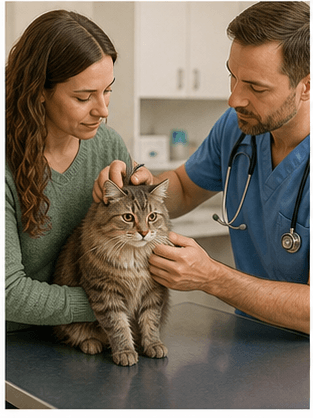
Concerned cat owner with a cat during a veterinary exam for FIP guidance
Suspected FIP needs prompt veterinary evaluation and careful follow-up.

Compare with similar dog symptom guides: Why is my dog breathing heavy?, Why is my dog coughing?.

Educational guide only. This article does not replace a veterinary exam, diagnosis, or emergency care.

What Is FIP in Cats?

FIP is a serious, systemic disease caused by a mutated form of the feline coronavirus (FCoV). Most cats that encounter feline coronavirus experience mild gastrointestinal symptoms or none at all. In a small percentage of cases — estimated at 5–10% — the virus mutates within the body into a form that causes FIP.

FIP affects the immune system and can damage multiple organs. It is not directly contagious — FIP itself cannot be spread from cat to cat. The underlying feline coronavirus (which can trigger FIP) can spread through feces and shared litter boxes.

Forms of FIP

Wet (Effusive) FIP

The wet form is characterized by fluid accumulation in body cavities:

Wet FIP typically progresses faster than the dry form. It is more visually apparent and often how FIP is first suspected.

Checklist

  • Abdominal fluid buildup (distended, fluid-filled belly)
  • Chest cavity fluid (causing breathing difficulty)

Dry (Non-Effusive) FIP

The dry form involves granulomas (inflammatory cell clusters) forming in organs — particularly the kidneys, liver, eyes, brain, and lymph nodes. Symptoms depend on which organs are affected and may include:

Dry FIP is harder to diagnose because symptoms vary widely and mimic other diseases.

Checklist

  • Weight loss and muscle wasting
  • Fever that doesn't respond to antibiotics
  • Neurological signs — seizures, wobbling, behavior changes
  • Eye inflammation (uveitis)
  • Jaundice (yellow tinge to gums, eyes, or skin)

Mixed FIP

Some cats have elements of both wet and dry FIP, and the forms can transition from one to the other.

Which Cats Are Most at Risk?

FIP most commonly affects:

Checklist

  • Young cats (under 2 years) and senior cats (over 10 years)
  • Cats in multi-cat households, shelters, or catteries
  • Purebred cats — certain breeds including Bengals, Raguamuffins, Abyssinians, and Birmans appear more susceptible
  • Immunocompromised cats

Symptoms of FIP in Cats

FIP can present differently depending on the form and organs involved. Common signs include:

Because these symptoms overlap with many diseases, FIP is not always the first diagnosis considered.

Checklist

  • Persistent fever unresponsive to antibiotics
  • Progressive weight loss and loss of appetite
  • Lethargy and weakness
  • Pot-bellied appearance (wet form — fluid in abdomen)
  • Difficulty breathing (wet form — fluid in chest)
  • Neurological symptoms — seizures, incoordination, paralysis (dry form)
  • Eye changes — cloudiness, inflammation, unequal pupil sizes

How Is FIP Diagnosed?

FIP diagnosis is challenging because there is no single definitive test in routine clinical use. Vets typically use a combination of:

A definitive diagnosis traditionally required biopsy, but with the availability of antiviral treatments, some vets now treat presumptively based on strong clinical evidence.

Checklist

  • Physical exam and clinical signs
  • Blood tests — low albumin-to-globulin ratio, elevated globulins, anemia, elevated bilirubin
  • Fluid analysis — FIP fluid is typically yellow, viscous, and high in protein
  • Coronavirus antibody titers — elevated levels support but don't confirm FIP
  • Immunohistochemistry or PCR testing on tissue or fluid samples — more definitive
  • Advanced: Rivalta test for abdominal fluid

FIP Treatment: GS-441524 and Antivirals

The landscape for FIP treatment changed dramatically with the discovery that nucleoside analogues — particularly GS-441524 and molnupiravir — are highly effective against the FIP virus.

GS-441524, a precursor to the antiviral remdesivir, has shown remission rates exceeding 80% in clinical and field studies when given for 84+ days (12 weeks). In 2023, Bova Pharmaceuticals received approval for Mutian and later Xraphconn for FIP treatment in several markets.

Treatment involves daily injections or oral tablets for a minimum of 84 days, followed by an observation period. Cats that remain symptom-free for 12+ weeks after completing treatment are considered to be in remission.

Neurological and ocular FIP typically require higher doses and longer treatment. Work closely with a vet experienced in FIP treatment — dosing protocols vary by form and severity.

Cost and Access

FIP treatment can be expensive — full treatment courses range from hundreds to thousands of dollars depending on the drug source, cat weight, and disease form. Licensed veterinary formulations are now available in several countries, including the USA, Australia, and parts of Europe. Patient assistance programs and rescue groups sometimes help offset costs.

Frequently Asked Questions

FIP itself is not directly contagious. The underlying feline coronavirus (FCoV) can spread between cats, but most cats that get FCoV don't develop FIP. Separate litter boxes and good hygiene reduce FCoV transmission.

With antiviral treatment (GS-441524), remission rates are reported to exceed 80–85% for wet and dry FIP. Neurological FIP has a somewhat lower but still significant response rate.

The standard protocol is at least 84 days (12 weeks) of antiviral treatment, followed by a 12-week observation period. Total process: approximately 6 months.

Relapse is possible but uncommon when treatment is completed properly. Some cats that relapse respond to retreatment. Regular monitoring after completing the course is important.

Wet FIP causes fluid accumulation in body cavities (abdomen or chest), causing visible swelling and breathing issues. Dry FIP involves granulomas forming in organs with variable symptoms depending on what's affected — often harder to diagnose.