🐾Pawbiotics

Dogs

Can Dogs Have Down Syndrome? The Science Explained

Published 2026-05-0310 min read

You may have seen viral videos or posts about dogs described as having "Down syndrome" — and wondered if that's actually possible. The short answer: dogs cannot technically have Down syndrome. But they can have genetic and developmental conditions that produce similar-looking characteristics. Here's what the science actually says, and what those conditions really are.

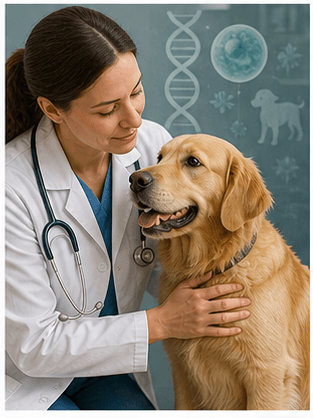
Veterinarian gently examining a dog for a respectful dog genetics and health guide
Dogs can have congenital or genetic conditions, but human Down syndrome does not map directly to dogs.
Educational guide only. This article does not replace a veterinary exam, diagnosis, or emergency care.

What Is Down Syndrome?

Down syndrome (Trisomy 21) is a chromosomal condition in humans caused by the presence of a full or partial extra copy of chromosome 21. Humans have 23 pairs of chromosomes — 46 total. People with Down syndrome have 47.

It causes a recognizable set of physical features and cognitive characteristics, including a flattened facial profile, almond-shaped eyes, and intellectual developmental differences.

Why Dogs Can't Have Down Syndrome

Dogs have 39 pairs of chromosomes — 78 total. Humans have 23 pairs. Because chromosome numbers and structures differ completely between species, the specific condition "Trisomy 21" as it occurs in humans cannot occur in dogs.

Even if a dog had an extra copy of one of its 39 chromosome pairs, it would not be the same condition as human Down syndrome — biologically or genetically.

What Conditions Can Mimic Down Syndrome in Dogs?

While Down syndrome itself doesn't apply, dogs can have genetic, developmental, or health conditions that produce similar features. These are sometimes informally (and inaccurately) called "dog Down syndrome."

Congenital Hypothyroidism

An underactive thyroid gland from birth can cause stunted growth, a broad flat face, widely spaced eyes, a large protruding tongue, and cognitive slowness — features that closely resemble human Down syndrome. It can be diagnosed with a blood test and treated with thyroid hormone supplementation.

Pituitary Dwarfism

Caused by growth hormone deficiency, pituitary dwarfism results in a puppy that stays abnormally small with delayed development. It's most common in German Shepherds and can include features like a flattened face and wide-set eyes.

Congenital Heart Disease

Some dogs are born with heart defects that restrict oxygen and blood flow, affecting development. This can manifest as physical and cognitive differences.

Portosystemic Shunt (Liver Shunt)

A congenital blood vessel abnormality that allows blood to bypass the liver, causing toxin buildup in the brain. Affected dogs may show behavioral changes, confusion, and delayed development.

Other Chromosomal Abnormalities

While not Trisomy 21, dogs can experience other chromosomal errors — particularly during cell division in early development. These can produce a range of physical and neurological differences, though research in this area is still limited.

Physical and Behavioral Signs That May Be Noticed

Dogs with the above conditions may display:

These signs alone don't confirm any diagnosis. A veterinarian must evaluate the dog and run appropriate tests.

Checklist

  • Unusually broad or flat face
  • Wide-set or upward-slanting eyes
  • Small stature or stunted growth
  • Large or protruding tongue
  • Cognitive slowness or difficulty learning commands
  • Poor muscle tone
  • Hearing or vision issues

How to Care for a Dog With Developmental Differences

Dogs with genetic or developmental conditions often live full, happy lives with appropriate support:

Many owners of dogs with developmental differences report deep bonds and joyful lives with their pets.

Checklist

  • Regular veterinary monitoring for any underlying conditions
  • Patient, positive reinforcement-based training
  • Safe, enriched home environment without hazards
  • Adjusted exercise and nutrition based on their specific needs
  • Extra supervision, especially around stairs and outdoor hazards

Frequently Asked Questions

Yes, dogs can have chromosomal abnormalities, though research into canine genetics is still evolving. These are not the same as human Down syndrome but can cause physical and developmental differences.

Certain breeds are predisposed to related conditions — German Shepherds are prone to pituitary dwarfism, and Beagles are more susceptible to congenital hypothyroidism. However, any dog can present with these conditions.

A vet will conduct a physical exam, blood work (including thyroid panels), genetic testing in some cases, imaging, and behavioral assessment to reach a diagnosis.

With appropriate care, many dogs with developmental or genetic differences live comfortable, happy lives. The prognosis depends on the specific condition and its severity.

Responsible breeding practices should include health screening and genetic testing to avoid perpetuating heritable conditions. Breeding affected animals is generally not recommended by veterinary organizations.