Core vs. Non-Core Dog Vaccines
Dog vaccines are divided into two categories:
Dogs
Published 2026-05-03 • 10 min read
Vaccinations are one of the most important investments in your dog's long-term health. A proper injection schedule protects your dog from serious and sometimes fatal diseases — and helps protect the broader pet population through herd immunity. This guide covers the complete dog vaccination schedule from puppy shots through adult boosters, including core and non-core vaccines.
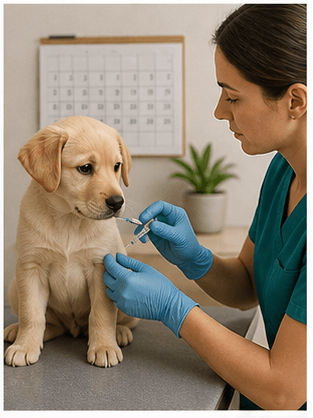
Dog vaccines are divided into two categories:
Core vaccines are recommended for all dogs regardless of lifestyle or location. They protect against diseases that are widespread, severe, or transmissible to humans:
These are often given as combination shots — the DHPP or DA2PP vaccine covers distemper, adenovirus, parvovirus, and parainfluenza in one injection.
Non-core vaccines are given based on risk factors including geographic location, lifestyle, and exposure potential:
Puppies receive maternal antibodies through their mother's milk, which gradually wane. Vaccinations begin at 6–8 weeks to build the puppy's own immunity before this protection fades.
Note: Some vets use a 3-year DHPP protocol after the initial series is complete. Always follow your vet's guidance based on your dog's risk profile.
After the puppy series and 12-month boosters, adult dogs follow a maintenance schedule:
Puppies must complete the full series for immunity to be reliable. Missing doses or spacing them incorrectly leaves a window of vulnerability to parvovirus and distemper — two diseases with high mortality in puppies.
Adult dogs that are overdue for vaccines may need their series restarted depending on how long the gap has been. Your vet can run titer tests to measure current antibody levels if you're unsure of vaccination history.
Vaccines are generally safe. Mild side effects are normal and include:
Serious reactions are rare but can include facial swelling, hives, vomiting, or collapse (anaphylaxis). Contact your vet immediately if your dog shows these signs within a few hours of vaccination.
Puppy vaccinations begin at 6–8 weeks of age. The DHPP series is typically given every 3–4 weeks until 16 weeks, followed by a booster at 12 months.
Yes, in most U.S. states and many countries, rabies vaccination is legally required. Requirements vary on frequency — check your local regulations.
Core vaccines like DHPP are typically given every 3 years after the puppy series is complete. Rabies and some non-core vaccines are given annually. Your vet will tailor a schedule to your dog.
Delays increase the window during which your puppy is vulnerable to serious disease. If a vaccine is missed, reschedule as soon as possible and inform your vet.
Yes. Even indoor dogs can be exposed to airborne disease (like distemper), parasites, or rabies if they ever go outside. Core vaccines are recommended for all dogs regardless of lifestyle.