🐾Pawbiotics

Cats

Are Cats Nocturnal? The Truth About Cat Sleep Cycles

Published 2026-05-019 min read

Your cat crashes all day. Then at 2am it sounds like a horse running laps through your apartment. You've probably assumed cats are nocturnal. But that's not quite right — and understanding what's actually happening makes it much easier to fix.

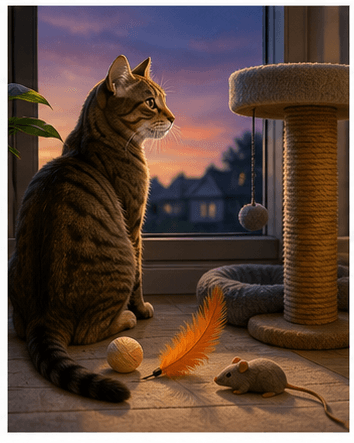
Cat sitting near a window at dusk with indoor enrichment toys nearby
Cats are often most active around dawn and dusk rather than being strictly nocturnal.
Educational guide only. This article does not replace a veterinary exam, diagnosis, or emergency care.

Are Cats Nocturnal or Diurnal?

Neither — technically.

Cats are crepuscular. That means they're most naturally active at dawn and dusk.

In the wild, their prey — small rodents and birds — is most active at these transitional light periods. Cats evolved to match that schedule.

True nocturnal animals (like owls) have peak activity during deep nighttime hours with adaptations for complete darkness. Cats aren't built that way.

Their eyes are adapted for low light — not pure darkness. The tapetum lucidum layer behind their retina amplifies available light, making them highly effective hunters at dusk and dawn.

Why Does Your Cat Act Nocturnal?

If your cat is crashing around at 3am, it's not because cats are nocturnal by nature. It's because of how your cat has adapted to your specific household environment.

You're Not Home During the Day

A cat alone in a quiet house often sleeps for most of the day — conserving energy and staying calm.

By the time you go to bed, they've had 10+ hours of rest and are fully recharged. That energy has to go somewhere.

Insufficient Stimulation

Cats need mental and physical stimulation. A cat that spends the entire day sleeping and unstimulated will have pent-up energy that explodes at night.

This is especially common in indoor-only cats without enrichment.

Feeding Schedule

If the cat's last meal is at 6pm, they'll be hungry again around midnight. A hungry cat is a vocal, active cat.

Medical Issues

In senior cats, sudden nocturnal activity — especially combined with yowling — can signal cognitive dysfunction syndrome (similar to dementia), hyperthyroidism, or pain.

If the behavior is new and your cat is over 10 years old, see a vet.

How Much Do Cats Sleep?

Adult cats sleep 12–16 hours per day on average. Senior cats can sleep up to 20 hours.

This isn't laziness — it's biology. Cats are ambush predators. Hunting requires explosive short bursts of energy. The rest of the time, energy conservation is the strategy.

Cat sleep is also different from human sleep. Cats move through lighter sleep cycles more frequently. The deepest REM sleep makes up a smaller proportion of their total sleep time.

How to Shift Your Cat's Activity to Daytime

You can influence your cat's schedule. It takes consistency and a couple of weeks.

Increase Daytime Play

Two dedicated play sessions per day — 10–15 minutes each — using a wand toy, feather toy, or laser pointer.

This expends physical and mental energy. A tired cat sleeps more at night.

Feed the Last Meal Late

Shift the last feeding to 30–60 minutes before your own bedtime. A cat that has just eaten is likely to groom and sleep.

Some owners use a timed automatic feeder for a small late-night or early-morning meal — this addresses hunger-driven 3am wake-ups without you having to get up.

Enrich the Environment

Puzzle feeders, window bird feeders, climbing trees, and interactive toys all stimulate cats during the day.

A cat that's mentally engaged during daylight hours will sleep more soundly at night.

Don't Reward Night Behavior

Getting up to feed or play with a cat that's meowing at 2am teaches them that making noise gets results.

Ignore the nighttime behavior consistently. It gets worse for a few days before it gets better. Stay the course.

Confine at Night If Necessary

For cats that are truly disruptive, keeping them in a comfortable room with food, water, litter, and a cozy bed can break the cycle while you implement other changes.

Do Cats See in Complete Darkness?

No — this is a common myth. Cats cannot see in total darkness.

What they can do: see approximately 6x better than humans in low-light conditions. Their pupils dilate to nearly the full eye width. The tapetum lucidum reflects light back through the retina for a second pass.

In a pitch-dark room with no ambient light at all, a cat is as blind as a human.

❓ Frequently Asked Questions

Frequently Asked Questions

Most likely because they've slept most of the day. Increase daytime play and stimulation, shift the last meal to late evening, and be consistent about not rewarding nighttime behavior.

Naturally, cats are most active at dawn and dusk (crepuscular). Indoors, they often adapt to a semi-nocturnal schedule that reflects when their owners are home and active.

Personal choice — but if nighttime sleep disruption is a problem, keeping the cat out of the bedroom may help. Cats move, groom, and settle repeatedly throughout the night.

In unspayed females, nighttime yowling is often heat cycles. In senior cats, it signals pain, cognitive dysfunction, or hyperthyroidism. In younger cats, hunger or attention-seeking. Rule out medical causes first.

Yes. Consistent scheduled play before bed, late-night feeding, and not reinforcing nighttime behavior gradually shifts most cats to a more compatible schedule. Expect 2–4 weeks of consistency before significant improvement.